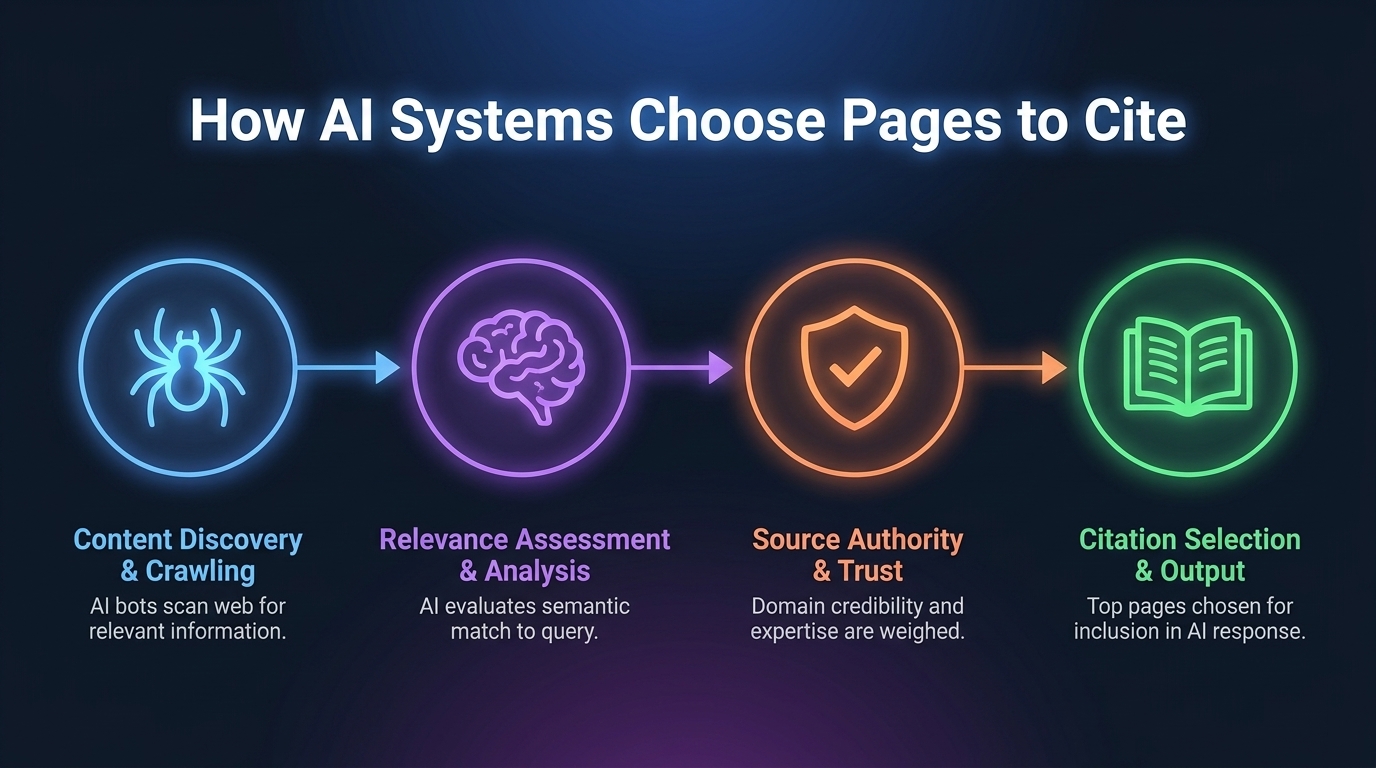
Ranking vs. selection
Traditional search ranks pages against a query. Answer engines do something different: they gather a candidate set of strong pages, then decide which one to quote. Two pages can sit in the same top results and only one will be cited in the AI answer. That second decision is selection.
Selection is the moment an AI system decides a page presents its information in a form it can trust and reuse. A page can rank well and still be passed over if it is unclear, contradictory, or hard to follow.
Why clarity matters
Clarity is not the same as readability for people. It is about whether a page communicates a topic plainly enough that a system, and a human, can understand what it is actually saying without guessing. Pages that state their point plainly and stay on topic are simply easier to understand and trust.
Trust and consistency
AI systems lean toward pages that feel credible and internally consistent. That includes clear authorship and organization, content that lines up with any structured data the page provides, and information that does not contradict itself. When the visible page and its underlying data tell the same story, the page reads as more trustworthy.
Where it gets hard
Selection is not guaranteed and not fully predictable. Some topics genuinely require nuance that resists a single clean answer. Content hidden behind interactive elements may never be seen by AI retrieval systems. Pages that are rarely updated can lose ground to fresher sources. Being clear and trustworthy improves the odds, but it is never a guarantee of citation.